• You will need to login or register before you can post a message. If you already have an Agriville account login by clicking the login icon on the top right corner of the page. If you are a new user you will need to Register.

Are humates effective?

Collapse
X
Collapse
 
  • Time
  • Show
Clear All
new posts
  • furrowtickler
    Senior Member
    • Dec 2004
    • 22023

    #11
    We use ligno humate in our 28-0-0 at seeding time , 1/2 lt /ac
    Going to seed treat all peas this year
    Follow up with 1/2 lt /ac in crop in peas at first flower / fungicide time
    Wheat at herbicide and late flag / early heading.
    Not economically conclusive yet in crop on canola that we have seen yet.
    Seeing a 4-1 payback in peas , 3-1 in wheat.
    Not a "humate" product so to speak but similar results.

    Comment

    • Koldkanuck
      Senior Member
      • Nov 2008
      • 227

      #12
      It must work to some limit. In the old days, I remember anyone that burned coal in their stoves, would save the coal ash, and sprinkle it on their gardens. They all said it was a good source of fertilizer. Now I'm to old to understand some of this stuff, but is humates and the acids referred to in humates not similar to what's in coal or coal ash?

      Comment

      • blackpowder
        Senior Member
        • Feb 2010
        • 9333

        #13
        I beleive the Aztecs may have used charcoal as well.
        But again, what specific soil #s does it aid for $5 - $10/ ac.
        Not skeptical necessarily, just that every fringe product for my whole career has same sound.
        Neighbors put exhaust carbon back into furrow as well (without fert) but that was a joke. Cows cant live on farts alone.
        Local humate salesman hasnt a degree in ditchdigging and has no concrete answers.
        If your soil or moisture #s are the limiter??
        50lbs Calcium carbonate in seed row adjusts ph and does same? Shit I dont know.
        Half my soil solonetzic base at 5.5 ph.

        Comment

        • JoeyJeremiah
          Senior Member
          • Apr 2016
          • 105

          #14
          Originally posted by Koldkanuck View Post
          It must work to some limit. In the old days, I remember anyone that burned coal in their stoves, would save the coal ash, and sprinkle it on their gardens. They all said it was a good source of fertilizer. Now I'm to old to understand some of this stuff, but is humates and the acids referred to in humates not similar to what's in coal or coal ash?
          I read a scholarly article recently stating that many gardens in Europe don't grow anything from centuries of people putting ash in their gardens. Apparently it's alkaline and after centuries of application the soil won't grow anything. I can't recall what they where recommending for remediation.

          Comment

          • Guest

            #15
            Click image for larger version

Name:	photo resp.jpg
Views:	1
Size:	15.3 KB
ID:	765402

            You're headed in the right direction hobby. Back to basics as in the photo. The chem and fert companies understand the equation, every food producer(farmer) should as well. It all starts with carbon.

            Comment

            • Klause
              Senior Member
              • Sep 2010
              • 3644

              #16
              Half this field was conventional peas... I.E. acapella, sprayed with viper, yada yada.


              Other half got no fungicide. 1L/ac of a cheleated calcium/zinc product with viper, then back in with 2L/ac of an orthophos and 1L/ac of humic acid 2 weeks before this pic was taken.


              Now guess which side is which.


              And then guess the yield difference.


              Comment

              • furrowtickler
                Senior Member
                • Dec 2004
                • 22023

                #17
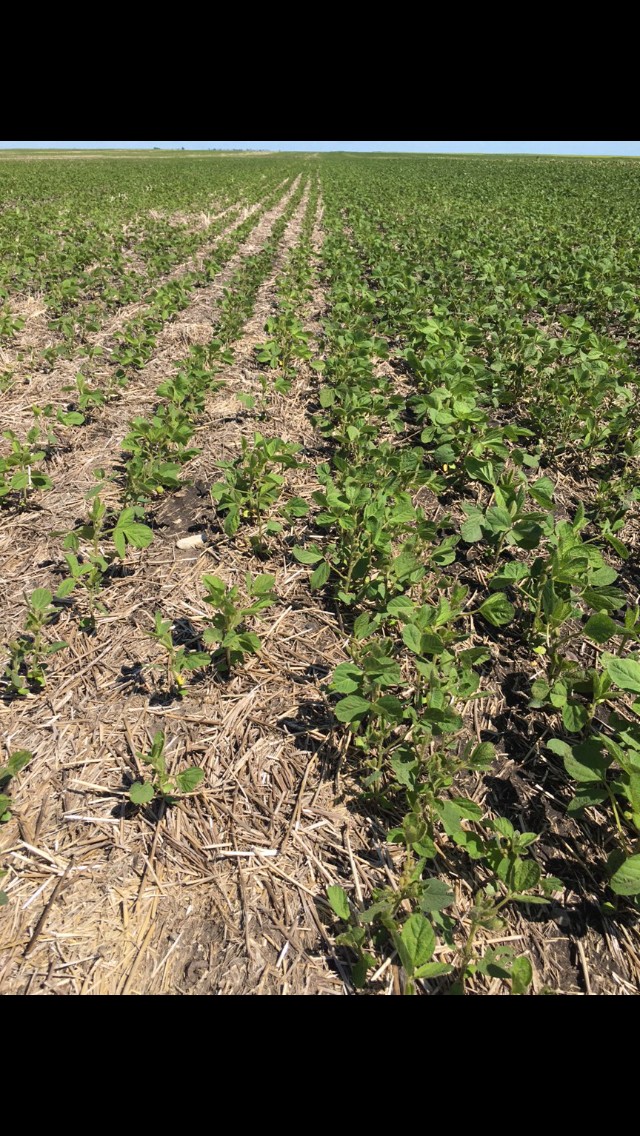
                This is lignojule, a ligno humate seed treatment on soybeans on the right ....

                Comment

                • blackpowder
                  Senior Member
                  • Feb 2010
                  • 9333

                  #18
                  No conventional seed treatments on either?

                  Comment

                  • furrowtickler
                    Senior Member
                    • Dec 2004
                    • 22023

                    #19
                    Not on that trial

                    Comment

                    • Klause
                      Senior Member
                      • Sep 2010
                      • 3644

                      #20
                      Insure Pulse on the whole 160ac on ours.

                      Comment

                      • Reply to this Thread
                      • Return to Topic List
                      Working...